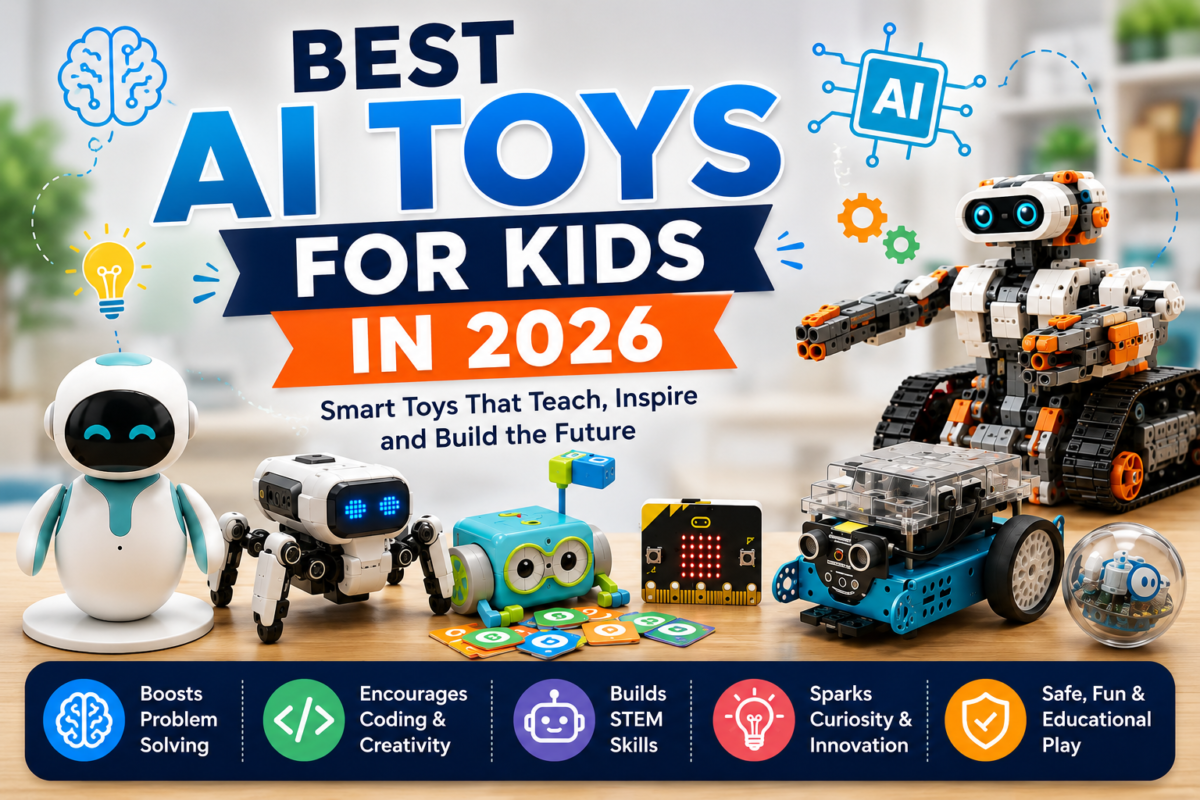
Artificial intelligence is becoming part of everyday life for children. They see it in apps, schoolwork, games, search tools, and increasingly, their toys. This has also created a new category of AI toys for kids, ranging from robots that introduce machine learning to coding kits that help children understand how smart technology works.
For parents, choosing the best AI toys for kids can be confusing. Some products genuinely introduce artificial intelligence, while others focus on coding, robotics, sensors, engineering, and problem-solving. Both can have educational value, but they do not offer the same experience.
This is also part of the wider challenge of parenting in the digital age. Children need opportunities to understand new technology while still making time for physical play, creativity, family interaction, and activities away from screens.
The best AI toys 2026 has to offer are not necessarily the ones with the longest list of automated features. Good AI learning toys should encourage children to ask questions, build things, experiment, solve problems, and understand why technology behaves the way it does.
We selected seven smart toys for kids that approach technology in different ways. Some introduce real AI and machine-learning ideas, while others are coding robots for kids or hands-on STEM kits that build the foundations children need to understand AI later.
Quick Comparison of the Best AI Toys for Kids
| Product | Best For | Main Learning Area |
|---|---|---|
| Thames & Kosmos KAI | Understanding real AI | AI and machine learning |
| Makeblock mBot2 | Advanced coding | Python, robotics and AI |
| Sphero Mini | Coding beginners | Programming and problem-solving |
| BBC micro V2 Starter Kit | Creative projects | Coding and electronics |
| Botley Coding Robot | Younger children | Screen-free coding |
| Sillbird Robot Building Kit | Kids who love building | Robotics and engineering |
| Energize Lab Eilik | Interactive robot fans | Robot interaction and technology |
1. Thames & Kosmos KAI: Best AI Learning Toy
Best for: Children curious about artificial intelligence
Recommended age: 10+
Focus: AI, machine learning, robotics and engineering
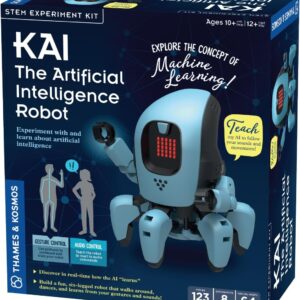
If you are specifically searching for educational AI toys, Thames & Kosmos KAI is one of the most interesting choices on this list.
KAI stands for Kosmos Artificial Intelligence. Children begin by assembling a six-legged robot from more than 100 pieces. Building it is only the beginning.
Children can then experiment with an AI model. Using a compatible smartphone or tablet, they can collect data based on gestures and sounds. The system learns to recognise patterns in that data and can associate them with particular movements.
For example, a child can train KAI to recognise a particular gesture and have the robot perform an action when it identifies it.
This provides a hands-on introduction to a basic principle behind machine learning. Computers need suitable data to recognise patterns and make predictions.
Among the AI STEM toys on our list, KAI therefore has one of the strongest connections to artificial intelligence itself. Children are not simply controlling a robot and being told that it uses AI. They get an opportunity to experiment with the ideas behind the technology.
Our take: One of the best choices for older children who want to understand what artificial intelligence actually does.
2. Makeblock mBot2: Best AI Coding Robot for Kids
Best for: Children ready to progress beyond beginner coding
Focus: AI, Python, robotics, sensors and IoT
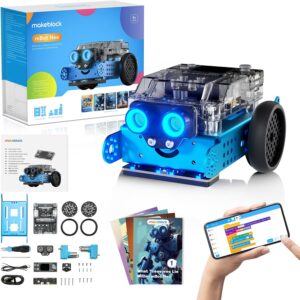
The Makeblock mBot2 sits somewhere between a toy and a serious educational robotics platform.
Children first get the experience of assembling and controlling a physical robot. They can start programming it with block-based coding before progressing towards Python.
This gradual learning curve is one reason mBot2 stands out among coding robots for kids.
Visual programming helps beginners understand sequences, loops, conditions, and instructions without immediately worrying about programming syntax. As their confidence improves, they can move towards more advanced programming.
The robot also uses sensors and components that let children explore navigation, obstacle avoidance, movement, sound, and information from their surroundings.
This can lead to useful questions.
How does a robot know something is in front of it? What information does it receive from a sensor? How should it respond?
These are simple questions, but they help children understand some of the building blocks behind smart machines.
Our take: One of the stronger AI robots for kids who are genuinely interested in coding, engineering, and understanding how technology works.
3. Sphero Mini: Best Coding Robot for Beginners
Best for: First-time coders
Focus: Programming, experimentation and problem-solving
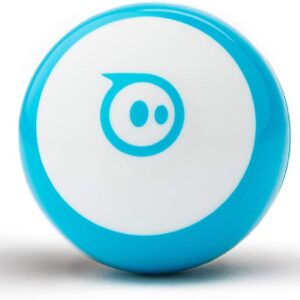
At first glance, Sphero Mini looks like a small robotic ball. Its simple appearance hides quite a bit of technology.
Children can control the robot and use coding activities to determine how it moves. This creates a useful connection between digital programming and something happening in the physical world.
When children change their program and see Sphero behave differently, coding becomes easier to understand. They can see what their instructions actually do.
Kids can create routes, challenges, games, and experiments. If Sphero goes in the wrong direction, they need to return to their program and work out what happened.
And yes, watching a little robot repeatedly drive into the wrong object can be surprisingly educational.
Sphero Mini is therefore a good option for parents exploring smart toys for kids without wanting to begin with a large or complicated robotics kit.
For families trying to manage technology use, it also helps to consider the quality of screen time rather than simply counting minutes. Our guide on how to limit screen time for kids effectively explains how parents can build healthier technology habits.
Our take: An approachable first coding robot that turns programming into physical play.
4. Vilros BBC micro V2 Starter Kit: Best for Creative Technology Projects
Best for: Kids who enjoy inventing things
Focus: Programming, electronics and experimentation
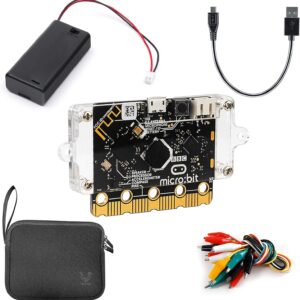
The BBC micro V2 is different from most AI toys for children on this list because it is not really a conventional toy.
It is a tiny programmable computer.
That simplicity is exactly what makes it useful.
Children can programme the micro and turn it into different projects instead of being limited to one robot or one activity. Depending on their skills and available components, they can create games, digital displays, alarms, counters, sensors, and simple inventions.
The V2 board includes an LED display, buttons, microphone, speaker, touch-sensitive logo, motion sensing, and connectivity features. Additional electronic components can also be connected.
This makes micro particularly suitable for children who constantly ask, “What happens if I try this?”
Hands-on experimentation can complement other learning activities that build curiosity and problem-solving skills. Parents of younger children can also explore these indoor activities that promote learning for more STEM, building, puzzle, and creative ideas.
Our take: A versatile option for children who enjoy inventing their own technology projects.
5. Learning Resources Botley: Best Screen-Free Coding Robot
Best for: Younger coding beginners
Recommended age: 5+
Focus: Screen-free coding, sequencing and logic
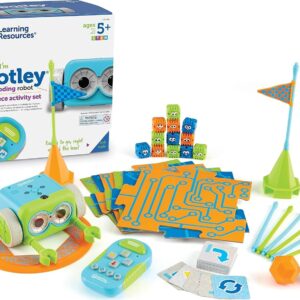
Parents who want to introduce coding without adding more screen time should take a look at Botley the Coding Robot.
Botley takes a different approach from many app-controlled AI learning toys.
Children can programme Botley without using a smartphone or tablet. They create sequences of instructions and then watch the robot carry them out in the physical world.
The 77-piece activity set provides objects and accessories for building challenges and obstacle courses.
Learning can begin with something as simple as programming Botley to move forward, turn, and reach a destination. Once children understand the process, they can experiment with longer sequences, loops, object detection, and more complicated challenges.
Botley is primarily a coding toy rather than a true artificial intelligence system, and that distinction is worth making. Still, it introduces computational thinking in a form younger children can understand.
For families actively trying to reduce unnecessary screen time, the screen-free design is another major advantage.
Our take: One of our favourite coding toys for younger children taking their first steps into programming.
6. Sillbird Robot Building Kit: Best STEM Robot for Kids Who Love Building
Best for: Children who enjoy construction and robotics
Recommended age: 8 to 13
Focus: Building, engineering, problem-solving and robot control
Not every child who loves technology wants to start by writing code.
Some want to build first.
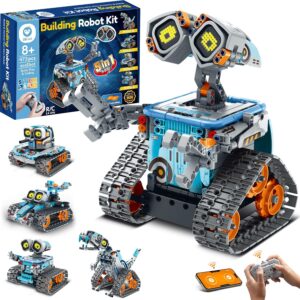
The Sillbird Robot Building Kit combines construction with robotics. Children assemble the robot themselves before moving on to controlling and experimenting with it.
This adds an engineering element that some ready-made AI robots for kids do not provide.
Putting hundreds of pieces together requires patience, attention, spatial thinking, and the ability to follow instructions. Once the model is complete, children get the satisfaction of controlling something they built themselves.
The kit supports multiple buildable models along with remote and app-based control.
Building activities can also play a useful role in early STEM development. SmartKaboodle’s guide to learning-focused indoor activities explains how construction play and hands-on problem-solving can encourage early STEM skills.
Our take: A good STEM choice for kids who would rather build a robot first and explore programming later.
7. Energize Lab Eilik: Best Interactive Robot Companion
Best for: Children fascinated by expressive robots
Focus: Human-robot interaction, reactions and entertainment
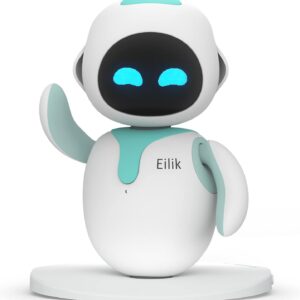
Eilik offers something quite different from the other smart toys for kids in this guide.
Instead of asking children to build a machine or complete coding exercises, Eilik focuses on interaction and personality.
The small desktop robot uses expressive animations, sounds, movements, and reactions to create the impression of a little robotic character.
Children can touch and interact with Eilik and watch how it responds. Multiple Eilik robots can also interact with one another.
It is important to describe Eilik accurately. It is better viewed as a smart interactive companion robot than as an educational machine-learning kit such as KAI.
That difference can actually lead to some interesting conversations.
Why does a robot appear happy? How does it know someone touched it? Is the robot really feeling an emotion, or has software been designed to produce that reaction?
As AI becomes more common, helping children understand the difference between genuine emotions and computer-generated behaviour becomes increasingly useful.
Our take: A fun option for children who are fascinated by interactive robots and their personalities.
What Makes a Good AI STEM Toy?
The word “AI” is now used quite loosely in toy descriptions.
A robot does not automatically use artificial intelligence simply because it moves, reacts to a button, detects an obstacle, or follows programmed instructions.
This is why parents comparing AI STEM toys should look beyond the label on the box.
KAI provides one of the clearest AI experiences in our selection because children can work with machine-learning concepts. mBot2 combines robotics and programming with opportunities to explore more advanced technology.
Products such as Botley, Sphero Mini, micro, and Sillbird focus more heavily on coding, logic, electronics, engineering, and robotics.
These skills still matter.
Before children can understand complex AI systems, it helps to understand simpler concepts such as instructions, inputs, outputs, sensors, data, conditions, and programming.
That is why a well-designed coding robot can sometimes be just as valuable as more sophisticated educational AI toys.
Are AI Toys Safe for Kids?
As more connected toys enter children’s bedrooms and playrooms, many parents are understandably asking: are AI toys safe for kids?
There is no single answer because AI and smart toys vary considerably.
A coding robot that follows instructions is different from an internet-connected companion that listens to conversations and generates responses.
Before buying connected AI toys for children, check whether the product contains a microphone or camera, requires an online account, connects to cloud services, stores information, or needs constant internet access.
Parents should also look at what happens to any information the toy collects and whether privacy settings can be adjusted.
Age matters too. Younger children may have difficulty understanding that an expressive robot is still a machine following software.
Our guide to parenting in the digital age looks more closely at helping children build healthy relationships with technology while maintaining offline play, family interaction, and other everyday activities.
The safest approach is to remain involved. Explore the toy together when it first arrives, understand its settings, and talk to your child about what the technology can and cannot do.
Which of the Best AI Toys 2026 Should You Choose?
The best AI toys for kids depend less on which product has the most technology and more on what your child enjoys doing.
For children who keep asking how artificial intelligence works, Thames & Kosmos KAI is our strongest AI-focused choice.
For children already interested in programming, Makeblock mBot2 offers considerably more room to develop their skills.
Sphero Mini works well as an approachable introduction to coding, while Botley is particularly suitable for younger children and families looking for screen-free programming activities.
Children who love making their own inventions may get more long-term use from the BBC micro V2.
If building is the main attraction, the Sillbird Robot Building Kit combines construction and robotics.
Finally, Eilik is aimed more at children who enjoy interactive robot characters than those who specifically want to learn programming.
There is no reason every child needs the most advanced product. The right toy is the one that makes them want to experiment, ask questions, and come back for another project.
What Parents Should Check Before Buying AI Toys for Kids
When comparing the best AI toys 2026 has to offer, price should only be one part of the decision.
Start with the recommended age. An advanced coding robot can be exciting for an older child but frustrating for a five-year-old. A simple early-learning coding toy may have the opposite problem with a twelve-year-old.
Next, check whether the toy requires a smartphone, tablet, app, subscription, or internet connection.
Consider privacy as well. This is particularly important with conversational AI toys for kids that use microphones, cameras, accounts, or online processing.
Then look at what your child can actually do with the toy.
Can they build something?
Can they programme it?
Can they change what it does?
Can they experiment and see different results?
Can the difficulty increase as they learn?
These questions can tell you more about the educational value of AI learning toys than a long list of technical features.
Final Thoughts
The best AI toys for kids in 2026 cover a surprisingly broad range of experiences.
Some, such as Thames & Kosmos KAI, introduce children directly to machine learning. Makeblock mBot2 combines robotics with coding and more advanced technology. Botley makes programming approachable for younger children, while BBC micro V2 gives curious kids a tiny computer they can turn into countless projects.
There are also AI robots for kids and interactive robots such as Eilik that can encourage children to think about how machines respond to humans.
The important part is choosing technology that gives children something meaningful to do.
One child may want to build a robot piece by piece. Another may spend an afternoon trying to programme the perfect route. Someone else may become fascinated by an expressive robot and start asking how it knows when someone has touched it.
Parents do not need to turn children into AI experts. Giving them opportunities to build, programme, experiment, question technology, and understand how smart machines work is a good place to begin.
As AI becomes a larger part of everyday life, those early experiences can help children become more thoughtful users of technology rather than simply passive consumers of it.

Add Comment