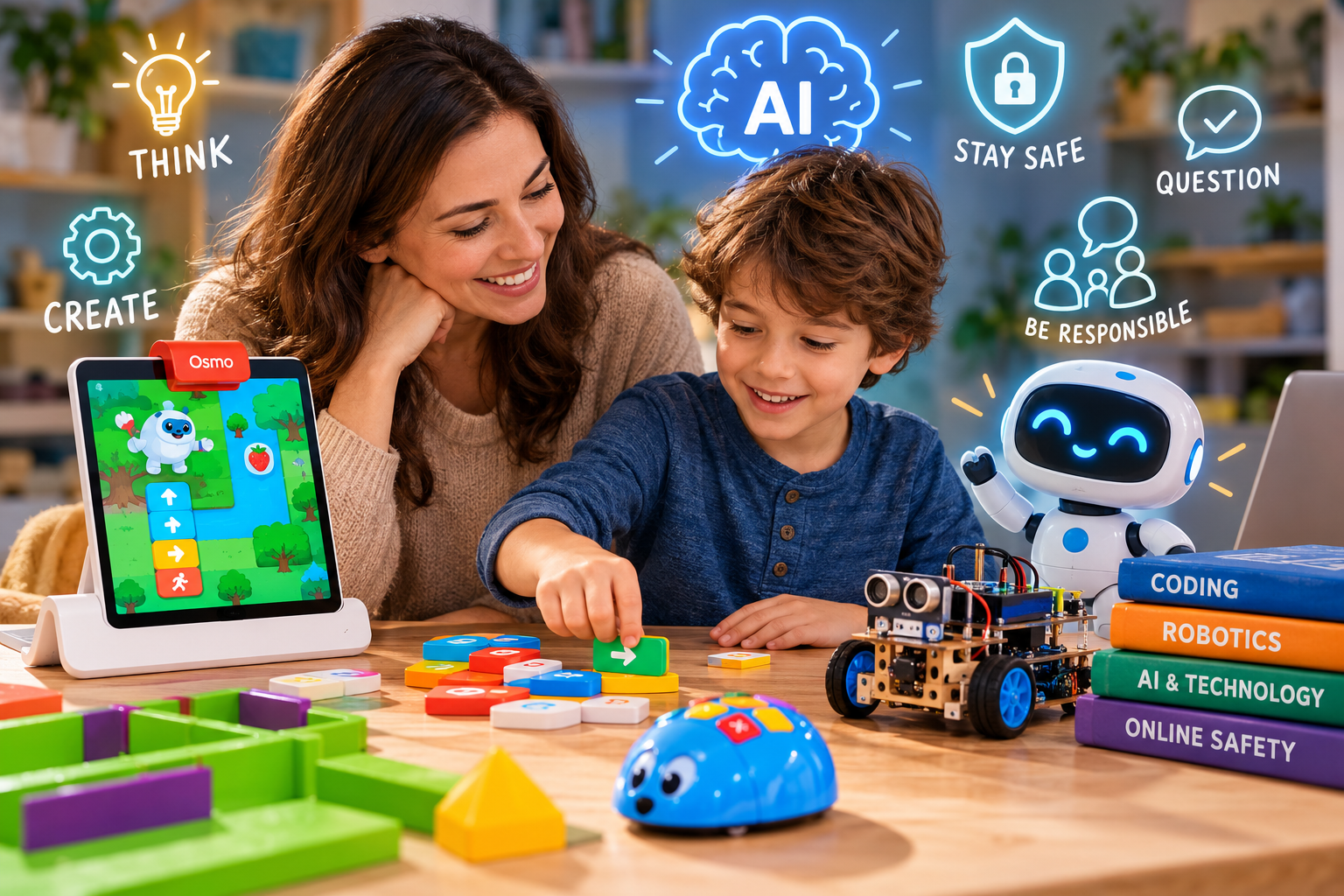
Artificial intelligence is becoming a normal part of childhood.
Kids can now ask AI questions, generate pictures, get help with homework, talk to chatbots, and interact with increasingly smart toys and devices. By the time today’s children enter the workforce, AI will likely be even more deeply connected to how they learn, communicate, create, and work.
For parents, this creates a new challenge.
Keeping children completely away from AI is unlikely to prepare them for that future. At the same time, giving them unrestricted access without teaching them how AI works can create problems.
The better approach is to help children become smart and responsible users of AI.
This is becoming another important part of parenting in the digital age. Children don’t need to understand complicated computer science, but they should understand what AI can do, what it cannot do, and when they should question it.
Here are seven lessons worth teaching your kids now.
1. AI Is Not Always Right
One of the first things children should understand is that an AI-generated answer is not automatically a correct answer.
AI tools can give impressive explanations and respond with a lot of confidence. However, they can also misunderstand questions, leave out important information, or generate information that simply isn’t true.
That makes critical thinking more important, not less.
Teach your child to ask:
- Where did this information come from?
- Can I confirm it somewhere else?
- Does this answer actually make sense?
- Is there a trusted source I can check?
This is especially important when children use AI for schoolwork.
Instead of asking an AI chatbot to complete an assignment, encourage your child to research the subject, form their own ideas, and use AI to help explain something they don’t understand.
A useful family rule is:
AI can help you find an answer, but you still need to think about the answer.
2. AI Should Help You Think, Not Think for You
AI makes many tasks easier, but easier isn’t always better for a developing brain.
If a child immediately asks AI to solve every maths problem, write every paragraph, generate every idea, or answer every question, they lose some of the thinking that helps them learn.
Children still need to practise problem-solving, creativity, writing, reading, reasoning, and decision-making.
A good way to reinforce this idea is through activities where technology requires the child to provide the thinking.
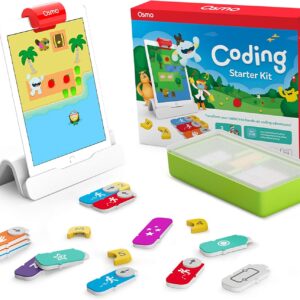
For example, the Osmo Coding Starter Kit combines physical coding blocks with digital activities. Rather than simply watching something happen on a screen, children have to arrange commands and work through coding problems themselves.
This type of play can help parents introduce an important rule:
Try to solve it yourself first. Then use technology to help you.
AI should become another tool in a child’s learning toolbox, not a replacement for learning.
3. Kids Should Understand How Technology Works
Children don’t necessarily need to become programmers, but understanding some basic technology can change the way they see AI.
Instead of thinking:
“The computer just knows.”
They can begin to understand that computers work because people build hardware, create programs, provide instructions, collect data, and design systems to perform particular tasks.
Hands-on coding and electronics are useful here.
For younger children, the Learning Resources Code & Go Robot Mouse Activity Set introduces programming without requiring a phone or tablet. Children create a maze and program a sequence of movements to help the mouse reach its destination.
The important part is that the child gives the instructions.
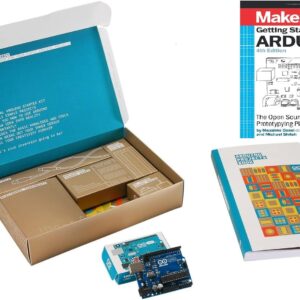
Older kids can go further with something like the Arduino Official Starter Kit Deluxe Bundle.
It allows children to experiment with programming and electronics and see the relationship between code and physical components.
Hands-on projects also provide a healthy balance to purely digital activities. SmartKaboodle’s guide to indoor activities that promote learning explores other ways parents can make learning more active and engaging.
4. AI Doesn’t Think or Feel Like a Human
This distinction may become increasingly important.
Chatbots can respond conversationally. AI-generated characters can appear friendly. Robots can react when children interact with them.
A child can easily start thinking:
“It understands me.”
But producing a human-like response isn’t the same as experiencing human feelings.
Children should understand that an AI chatbot doesn’t become happy because they compliment it or sad because they close the app. It can produce language that sounds emotional without experiencing emotions the way people do.
This becomes especially important when children start using AI companions or asking chatbots for personal advice.
Parents don’t necessarily need to ban those conversations. Instead, establish boundaries.
An AI tool can be useful for asking questions or exploring ideas, but it should not replace conversations with parents, friends, teachers, or other trusted people.
This is also a good opportunity to explain the difference between real relationships and digital interactions.
5. Personal Information Should Stay Personal
Children already need to think carefully before sharing information online. AI adds another place where that lesson matters.
A child might think:
“I’m only talking to a chatbot.”
So they may be more comfortable sharing personal details than they would be on social media.
Teach children not to casually enter information such as:
- Their full name
- Home address
- Phone number
- Passwords
- School name or location
- Private family information
- Financial information
- Personal photographs
- Information about another person
Parents should also look at the privacy settings of AI tools before allowing children to use them.
Ask some basic questions.
Does the tool save conversations?
Does it require an account?
What information does it collect?
Does it use a microphone or camera?
Can conversations or stored information be deleted?
These are good habits for AI, but they are also valuable digital habits in general.
6. Not Everything You See Online Is Real
A few years ago, parents could often tell children:
“Don’t believe everything you read online.”
Now that lesson needs an update:
Don’t believe everything you see, hear, or read online.
Generative AI can create realistic pictures, voices, text, and videos. That means an impressive image or convincing recording isn’t automatically proof that something happened.
Teach children to pause before sharing surprising content.
They can ask:
Who originally posted this?
Is there another reliable source reporting it?
Could this image have been generated or edited?
Is the account trustworthy?
This doesn’t mean children should assume everything is fake. It means they should learn to verify information before believing or sharing it.
This skill will become increasingly valuable as AI-generated content becomes harder to distinguish from human-created content.
7. Kids Need to Learn Responsible Technology Use
Knowing how to use technology and knowing how to use it responsibly are two different things.
Children should understand that AI shouldn’t be used to hurt, embarrass, deceive, or manipulate other people.
For example, children shouldn’t use AI to:
- Create fake pictures of classmates
- Impersonate another person
- Bully someone
- Spread false information
- Cheat on assignments
- Share another person’s private information
- Create embarrassing content about someone
- Trick people with fake messages or images
Cybersecurity education can make some of these ideas easier for older children to understand.
The ThinkFun Hacker Cybersecurity Coding Game, for example, uses logic challenges based around coding and cybersecurity concepts. ThinkFun describes it as an unplugged game for ages 10+ with Code It, Hack It, and Fix It stages across its challenges.

It gives parents another way to discuss an important idea: technology can be powerful, and how someone chooses to use that power matters.
A useful question to teach children is:
“Would I be comfortable if someone used AI this way on me?”
If the answer is no, that’s a good sign they should reconsider what they’re doing.
Don’t Forget Life Away From AI
Preparing children for an AI-powered future doesn’t mean filling every part of childhood with technology.
Kids still need to run around, build things, draw, read, talk, make mistakes, get bored, invent games, and interact with other children.
Screen-free play remains valuable even as technology becomes more advanced.
There is also a difference between spending an hour creating a coding project and spending an hour endlessly scrolling through short videos. Parents can think about both the amount and quality of children’s screen use.
If screens are starting to take over too much of the day, our guide on how to limit screen time for kids effectively offers practical ways to create healthier technology habits.
Another Hands-On Option for Kids
For children who enjoy building robots, the ACEBOTT Robot Kit is another way to move from consuming technology to creating it.
Instead of simply interacting with a finished device, children can explore robotics, electronics, coding, and problem-solving through a physical project.
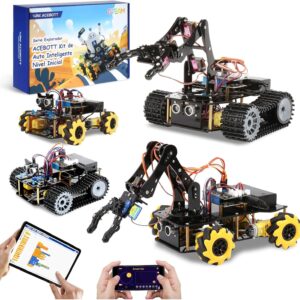
It doesn’t need to be presented as an AI toy. Its value here is helping children understand that the technology around them is designed, programmed, and built by people.
Parents Don’t Need to Be AI Experts
One reason parents may avoid talking about AI is that the technology can feel complicated.
Your child might even know more about a particular AI app than you do.
That’s okay.
You don’t need to understand every AI model or know how machine learning algorithms work to teach good habits.
Instead, stay involved.
Ask what AI tools your child is using.
Try some of them together.
Ask your child what they think the technology is doing.
Discuss strange or incorrect answers when you encounter them.
Talk about privacy.
And most importantly, make it normal for your child to come to you when something online makes them uncomfortable or confused.
SmartKaboodle is built around helping children learn through hands-on experiences as well as giving parents practical guidance for raising children around modern technology.
Final Thoughts
AI is changing childhood, but children don’t need to fear it.
They need to understand it.
Teach them that AI can be wrong, technology should support their thinking rather than replace it, computers don’t think like people, private information needs protection, online content can be manipulated, and powerful technology needs to be used responsibly.
At the same time, give children opportunities to build, code, experiment, read, play, and solve problems without asking AI for the answer.
Today’s children may grow up surrounded by artificial intelligence.
The most useful thing parents can give them isn’t the ability to use every new AI tool that appears.
It’s the ability to think for themselves while using those tools wisely.

Add Comment